knowledge of one’s self) (1) The immediate intellectual perception a person has of his own existence and actions. The more common term for this is consciousness. (2) A judgment of the intellect, dictating what is to be done as morally right, or what is to be avoided as morally wrong, in the particular circumstances in, which one is now placed. Conscience is an act of the virtue of prudence. In that it is concerned with the morality of a particular case, conscience differs from a knowledge of the fundamental principles of right and wrong (synderesis), and from the understanding of their general conclusions (moral science). Conscience is said to be certain when it dictates something as right or as wrong, without experiencing any reasonable fear of the opposite being true. It is doubtful when it is undecided which of two contradictory views is true. A fundamental law of ethics decrees that a person is never allowed to act with a doubtful conscience. This means that one who seriously doubts the lawfulness of some action and nevertheless performs it, commits sin. The same is true of one who doubts whether it is permissible to omit some action, and yet omits it. One who is in such a state of doubt and wishes to perform (or to omit, as the case may be) the action in question should first obtain certainty of conscience. When strict certainty cannot be obtained, it is sufficient to have moral certainty in the broad sense, viz., that which is based on arguments of probability. All Catholic theologians admit this principle, although there is a variety of views as to how much probability in favor of liberty is required in order that a person may licitly abstain from obeying a law that probably binds him. Conscience is true when its dictate as to what is right or wrong is correct; erroneous, when it judges what is really wrong as right, or vice versa. The prescriptions and the prohibitions of a conscience that is invincibly erroneous must be followed. In other words, when a person in good faith judges erroneously that he is obliged to perform or to omit a certain act, then he commits sin if he fails to perform or to omit it, as the case may be. For the light of his own reason constitutes for every individual the ultimate subjective norm of his conduct; and God’s rewards or punishments are meted out to every one, according as he has obeyed or disobeyed the voice of his own conscience. Conscience is sometimes taken in a broader sense to signify the knowledge and the remembrance a person has of the right or wrong of his past actions. In this sense we speak of the examination of conscience.
Why Non-Catholics are refused Communion at mass
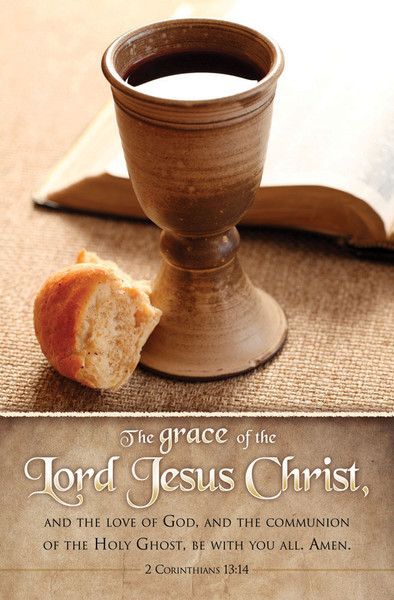
Why Non-Catholics are refused Communion at mass First of all it should be said that we, as Catholics, would love it if every baptized and believing Christian would receive Holy Communion! This is the desire of the heart of Jesus and is His greatest gift He has given us. It is the gift of His precious Body and Blood, Soul and Divinity. But that desire, on our part, is not enough for us to be able to share this most precious gift with others. There are some other essential requirements that have to be met for others to properly be prepared to receive such an incredible gift. It should also be said that Jesus Himself desires that all come to receive this gift of the most holy Eucharist even more than we could ever desire it. This is the gift of the New Covenant, the gift of His very life, the gift of everlasting salvation. This is the reason He came into the world! He came so that we could enter into perfect Communion with Him through His Body and Blood and, through this gift, enter into everlasting life. He Himself said, “Whoever feeds on my flesh and drinks my blood has eternal life and I will raise him on the last day!” So why don’t we just invite everyone, Catholic or not, to receive this precious gift at Mass? The answer is quite simple. In order to receive this gift, you have to believe in it fully. It would be wrong to receive this perfect gift of Christ Himself if you did not understand what this gift was or if you just thought it was a symbol or a representation of Christ’s body. As Catholics we believe something very unique about the Holy Eucharist. It’s a belief that we share only with the Eastern Orthodox Churches which we do actually allow to receive Holy Communion in our Church. All other Christian religions believe something different than we do about the Eucharist. The bottom line is that if a Christian of another denomination truly believed what we believed about this Sacred Host and Precious Cup in the Catholic Mass, then they would convert to the Catholic faith to receive it. And to that we say, “All are welcome!” All people are most welcomed and encouraged to come to share our faith, make a full profession of faith, enter into full communion with the Catholic Church and, at that point, share in the Holy Eucharist. I should also note that we as Catholics should not partake of communion in other Christian denominations if we happen to attend one of their services for some reason. The reason is that by participating in communion in their church, we would be saying we believe what they believe about communion rather than what we hold to be true. Let’s pray that one day all will be one in our Lord and share the same holy Catholic faith!
Worship of Saints?
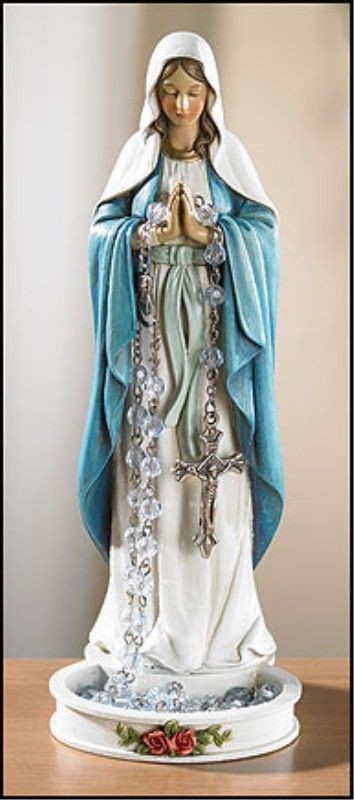
Worship of Saints? I’ve heard it said that Catholics break the First Commandment because we worship saints. This is a misconception and I’d be happy to explain. we don’t worship saints. Worship is something due to God alone. By worshiping God we do a few things. First, we acknowledge that God is God and He alone. The First Commandment states, “I am the Lord your God, you shall have no other gods besides me.” Worship requires we acknowledge that there is only one God. Second, we acknowledge that, as the one God, He is our creator and the only source of our salvation. In other words, if you want to find true happiness and fulfillment and you want to get to Heaven, there is only one way. Jesus, who is God, is the only one who saves us from sin and worship of Him acknowledges this fact. Furthermore, worship is a way of opening our lives up to His saving power. By worshipping God we allow Him into our lives so that He can save us. Third, true worship also helps us to see God’s goodness and helps us to love Him as we ought. So worship is a kind of love we give to God alone. But what about the saints? What is their role and what sort of “relationship” should we have with them? Remember, anyone who has died, and gone to Heaven, is considered a saint. The saints are all those who are now before the throne of God, face to face, in a state of perfect happiness. Some of these men and women, who are in Heaven, are called canonized saints. This means that after much prayer and much study of their lives on earth, the Catholic Church declares that they are, indeed, in Heaven. So that brings us to the question of what our relationship should be with them. Since the saints are in Heaven, seeing God face to face, we, as Catholics, believe that they can play two primary roles in our lives. First, the lives they lived here on earth give us a great example of how to live. So saints are declared saints, by the Catholic Church, in part so that we will be able to study their lives and be inspired to live the same lives of virtue that they did. But we believe they take on a second role also. Since they are in Heaven, seeing God face to face, we believe that the saints can pray for us in a very special way. Just because they are in Heaven doesn’t mean that they stop caring about us here on earth. On the contrary, since they are in Heaven, they care about us even more. Their love for us has now become perfected. Therefore, they want to love us and pray for us even more than when they were on earth. So imagine the power of their prayers! Here is a very holy person, seeing God face to face, asking God to enter our lives and fill us with His grace. It’s kinda like you asking your mom, dad or a good friend to pray for you. Sure, we need to pray for ourselves also, but it certainly doesn’t hurt to get all the prayers we can. So that’s why we call upon the saints to pray for us. Their prayers do help us and God chooses to let their prayers be a reason that He pours even more grace upon us than if we were praying alone.
Biblical Foundation of Devotion to Mary & Divine
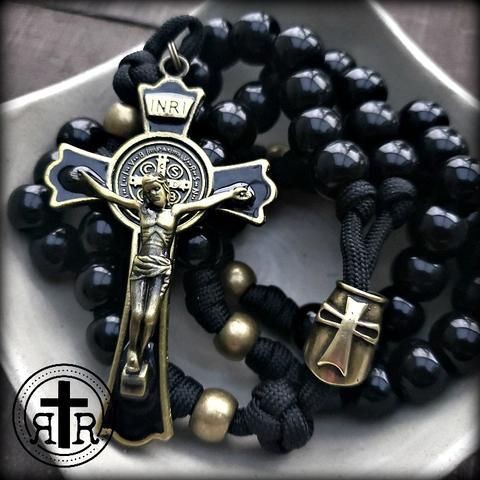
Biblical Foundation of Devotion to Mary & Divine Mercy Chaplet Strictly speaking, the Bible does not explicitly say, “Pray the rosary and other devotions to Mary.” However there are biblical foundations to those practices. So let’s take a look at that. Regarding devotion to Mary, there are numerous ways that devotion to her is found in the Bible. Here are some of those ways. First, the Rosary, which is the most common devotion to our Blessed Mother, is primarily Scriptural. On each bead of the rosary we pray the words of the Angel Gabriel to Mary, as well as the words of St. Elizabeth to Mary. “Hail, full of grace, the Lord is with you.” And, “Blessed are you among women and blessed is the fruit of your womb” (Luke 1:26-46). Additionally, we pray the “Our Father” prayer which is directly from Jesus and pray the “Glory Be” prayer which is echoed in Scripture numerous ways. So, yes, the Rosary is very Biblical in that sense. We are primarily repeating certain Scriptures. Additionally, in praying the Rosary we are to meditate upon one of twenty different Scriptural stories during each of the twenty decades. So the prayers are Scriptural and the meditations are Scriptural. Second, devotion to Mary in general comes to us from the fact that Jesus lived the Fourth Commandment perfectly. That Commandment says, “Honor your father and mother.” Jesus honored His mother perfectly and we are to imitate Jesus in all He does. Therefore, we are to honor His mother, too. Third, at the Cross Jesus said to the Apostle John, “Behold, your mother.” And in giving Mary to John, the Church has always seen that Mary is given to all of us. We are all to behold our mother in the person of Mary. Fourth, Jesus gave Peter the Keys to the Kingdom of Heaven and said that whatever he binds on earth is bound in Heaven (Matthew 16:19). He gave Peter the gift of infallibly leading the Church into all truth. We believe that this gift of infallible teaching did not stop with Peter but was passed on through the ages to all his successors whom we call the popes. And these popes have definitively taught, in countless ages, the value of honoring our Blessed Mother. So though this last point is not a direct biblical call to honor our Blessed Mother, it is an indirect Biblical command through the teaching of the Church founded by Christ in the Scriptures. There are also numerous ways in which Mary is spoken of in the Old and New Testaments which would require a book to detail it all. But hopefully the few thoughts above help. Regarding the Chaplet of Divine Mercy, the same basic principles apply. Though this Chaplet is not mentioned in Scripture, the message and meditations are deeply Scriptural in every way. “For the sake of His sorrowful passion, have mercy on us and on the whole world.” This is the heart of the Chaplet and it is at the heart of the Gospel message. In truth, there could not be a more Scripturally based prayer than this. The Scriptures reveal God’s mercy, His gift of salvation and our need for it. The Scriptures point to Jesus’ saving sacrifice as the source of salvation and this Chaplet acknowledges that truth and calls upon that grace. So, yes, it is very Scriptural. The last point to make is this. Be sure to use the Bible in the way it was written. It was not written as a strict and complete roadmap which answers every question directly. Yes, it does answer every question and gives us the necessary message of salvation. It is the fullness of revelation from God. But Jesus never said to us, “Here is my Bible. Follow it and only it. Do not do anything that is not explicitly spoken of in these pages.” No, what Jesus did is to start His Church through the foundation of the Apostles. And from that Church the Bible was also given. But the Bible must always be read in union with the Church and Her teachings through the ages.
Do animals go to Heaven?
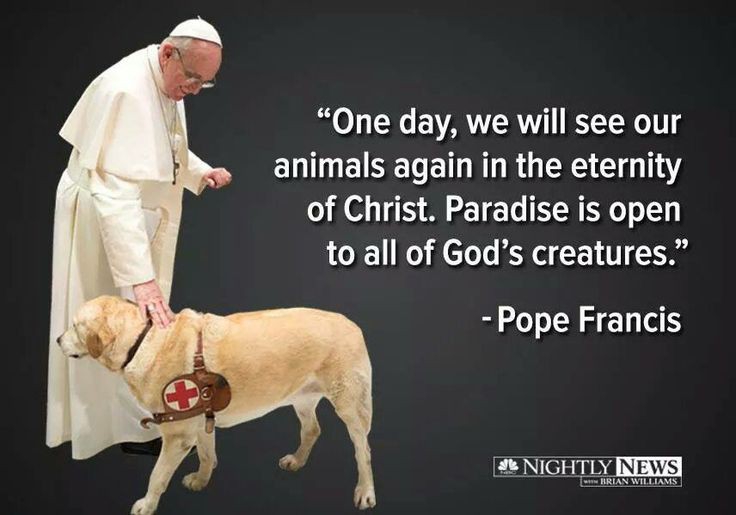
Do animals go to Heaven? This is a commonly asked question especially by children. It seems that the deep affection people have for their pets leads them to a strong desire for a “yes” to this question. This is a difficult question that does not have a clear and absolute answer. Therefore, any answers you give could be correct. However, let’s offer some clarity and possibilities regarding the afterlife and animals. First of all, when we humans die right now,we believe that our body and soul separate. The body dies and is “laid to rest” until Jesus returns in all His glory and brings about the resurrection of the body. Until then, the body is dead. However, the spirit of humans lives on. Our spirit cannot die and, thus, Heaven (or Purgatory or Hell) await our spirits after earthly death. Only humans, angels and God have eternal spirits. Animals do not. Therefore, for now, when an animal dies it is dead and there is no spirit that lives on in Heaven. But there is hope that your pet, and all creatures, will rise again. How and why? The reason you can have this hope is because from the very beginning of time, in the original state of holiness (the Garden of Eden) it appears there were animals. So, even though animals do not have eternal spirits, they are physical and have what we may call an animal soul. An animal soul does die when the animal dies but there is no telling what may happen at the resurrection of the dead! When Jesus returns in all His glory and all humans rise from the dead will animals and all living creatures also rise? This is something you can hope for. Furthermore, Isaiah 11:6 speaks prophetically about this new age to come. And in that passage it says, “Then the wolf shall be a guest of the lamb, and the leopard shall lie down with the kid; The calf and the young lion and the fatling together, and a little child shall lead them on.” So is this a literal statement? Is it proof that animals will rise? Or is it just symbolic and figurative? Hard to tell. However, for that reason it is worth having hope that animals will have some share in the new Heavens and Earth to come!
Chain Messages If you spend time on social media you’ve most likely come across emails or posts that make promises to you if you pass it on. For example, there may be a special prayer sent to you with the attachment at the bottom, “pass this on to twelve friends and you will receive your answer to prayer within twelve days.” And some come with warnings like “if you don’t pass it on, something bad may happen to you” what is the church’s view on this? Is it legitimate? No, it’s not legitimate. It’s pure superstition. However, with that said there is one clarification worth making. But first let’s look at the superstitious part. God does not make His grace and mercy contingent upon you forwarding an email to several friends. Perhaps the prayer that is included is quite beautiful and worth praying. But, nonetheless, the effect of that prayer is not dependent upon you following the instructions of an email. Only Christ and His Church have the authority to attach grace to prayers. The Church does so through indulgences. So if you receive one of these emails it may be best to pass on the prayer part but to remove the promise or warning. As for the clarification mentioned above, there have been certain private revelations given to mystics that do attached certain promises to certain prayers. Those private revelations and promises must always be evaluated by the Church. If approved, we can trust that God is offering a special grace through those prayers. But the key is that we seek out the guidance of our Church on all private revelations. https://www.instagram.com/p/B_2RYNSFhkB/?igshid=1j5cbvayjdeo3
The Journey Begins
Thanks for joining me!
Good company in a journey makes the way seem shorter. — Izaak Walton

 Marian child