Christians generally have this belief that getting a tattoo is a sin and anyone who wears a tattoo is definitely heading into the fires of hell. Is that what the church teaches? Are tattoos a sin? Perhaps the answer to this question is not as straightforward as we would like it to be. I think the best thing I can do is to offer some insights from Scripture and Catholic teaching to help you come to a good decision. In the Old Testament we read from the Book of Leviticus the straightforward command, “ … do not tattoo yourselves” (19:28). The first letter of St. Paul to the Corinthians explains that “ … your body is a temple of the Holy Spirit … ” (6:19). And the Catechism of the Catholic Church says, “Except when performed for strictly therapeutic medical reasons, directly intended …, mutilations, … performed on innocent persons are against the moral law” (#2297). So what does this all mean in regards to tattoos? First, I don’t think it means that tattoos are “intrinsically evil.” What I mean is that it would be an error to say that every tattoo in every circumstance is always wrong. Some cultures, for example, have a marking on the forehead to indicate ones marital status. Many Ethiopian Christians have the custom of tattooing a cross on their forehead to express their Christian faith. And we only need to look through the history books to see the many ways in which tattoos have been a part of many other cultures. Culture, I believe, is one important aspect to look at when discussing the morality of tattoos. One key point is that in many of these cultural examples, tattoos are not only socially accepted, they are also often socially expected. That, of course, is not the case in the many countries. So what about getting a tattoo in your country and in your culture? Allow me to offer three considerations. First,your body was made by God and is beautiful just as it is. To add an additional permanent marking to your body is not necessary. Some would even call it a mutilation. Doing this will not add to your bodies natural beauty. And since it is not a required part of our culture, there is no good reason to pursue one. Remember, your body truly is a temple of the Holy Spirit.We should, therefore, treat our body as we would God’s church. God has already designed and decorated this “church” in such a way that it really does not need an additional permanent alteration. Second, if you were to decide to get a tattoo anyway, please avoid the following: Diabolical images, ugly images, shocking images, images pertaining to horoscopes, and simply put, any image contrary to the Christian faith. Any image like this would surely fall into the category of sin. Third, make sure you are not acting out of peer pressure. Sometimes we can do things simply because our friends are doing it and we want to fit in. This is never a good reason. If our friends are real friends they will not pressure us into decisions like this nor will they look down on us if we choose not to “go with the flow.” Make sure your choice is not made out of pressure from others.

RELIGION
RELIGION In its widest sense the union of man with God. Objectively, it consists in doctrines and precepts by which man seeks to bring about this union. Religion is true when its doctrines and precepts are either dictated by right reason or revealed by God; if the former, it is called natural religion, if the latter, supernatural religion. Religion is false if, when claiming to be revealed, it is unable to show a divine guarantee, or when its dogmas and practises are against right reason and conscience. Subjectively, religion is the attitude of the man who rules his thoughts, words, and actions according to right reason and revelation. In this latter sense religion is a special virtue allied to justice, because it prompts man to render to God what is due Him by strict right from His rational creatures. As such, religion is a strict obligation incumbent on every man. It is also the means by which man is to work out his final destiny.
DISCERNMENT OF A VOCATION
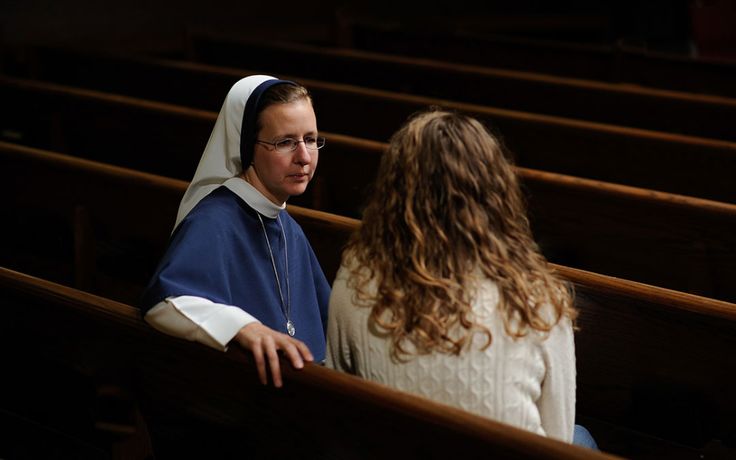
DISCERNMENT OF A VOCATION How do we choose the path we do? And how does anyone know for sure that God is calling them to do what they do or what their vocation is? The answer to these questions is what we call “discernment.” Discernment is a very important topic for young people as they look to their future. The first thing that is very important to know is that God does have a plan for your life and for everyone’s life. Sometimes it can be a bit frightening to be open to this plan or even to think about what God may want of you. But the first step to a very happy life is to know that whatever God wants of you is what is best way to a life of happiness! For some reason, it’s easy to think that whatever God wants us to do will be hard and will somehow make us unhappy. Sure, in theory we all know that this is not true. But in practice it can be hard to actually believe that God’s plan will make us happier than anything we could choose by ourselves. So my first suggestion for those trying to figure out the path for their lives is to stop and simply acknowledge that God DOES have a wonderful plan for us! Once you come to actually believe that truth it’s important that you say yes to it. But that’s the tricky part! It’s “tricky” because God will usually want us to say “yes” to His plan even before we know what it is. This requires trust and surrender. This is hard because we often want to know all we are getting into before we agree to it. But with God, we have to know and trust that He will take care for us and that we will be happy with whatever He has in mind for us. So our prayer may look like this: “Lord, whatever you want of me I will do! I do not know your will right now but I say yes to it anyway and trust that you will show me your plan when I need to know it.” In fact, saying yes to God’s will before we fully understand it is often the key to having God begin showing us what He wants. Personally, I found out that discerning God’s plan for one’s life is usually very slow and consistent. What I mean is that, as we go through the time of discernment, you will slowly and steadily grow in a conviction of where God is leading you. There would be no loud and clear signs for you to see. Rather, it will be a gentle Voice that slowly becomes clearer and clearer over time. In the end, when you’re ready to make the final decision, you would discover that your conviction would be so strong, that you’ll be convinced that it must be God Who is leading you there. As for knowing for sure, I do believe it’s possible to know with deep certitude. It’s just a matter of silencing the many thoughts and ideas we have and letting go of all our own preferences and letting God’s will take over. All I can say is that you will know it when that happens. In fact, this sort of certitude, which we call the gift of faith, can ultimately become much clearer to us than anything else if we only allow it speak to us!

THE CREED
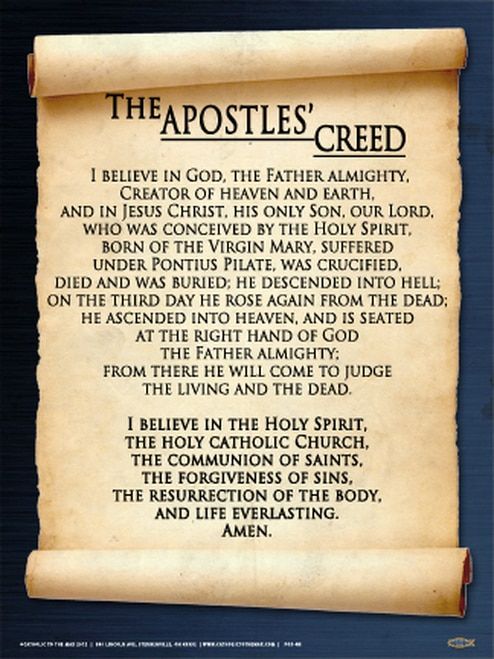
THE CREED A form of belief. Applied to the religious sphere, the term has two meanings. First, it signifies the entire body of beliefs held by the adherents of a given religion; thus it is synonymous with doctrine or objective faith, as when we refer to the “conflict, of creeds.” Second, in a more restricted sense, it denotes an authoritative summary of the principal articles of faith professed by a body of believers, as in the phrase “creeds of Christendom,” i.e.,the symbols or formulations of the Christian faith as drawn up and accepted by the various Christian churches. Practically, a creed is a distinctive mark of those who adhere to a specific religious belief. Hence a “profession of faith” is required in connection with the administration of Baptism, and on certain other occasions. The principal creeds publicly used in the Catholic Church are the Apostles’, Athanasian, and Nicene Creeds. Protestant formularies of faith are commonly designated “confessions of faith”.
PURGATORY
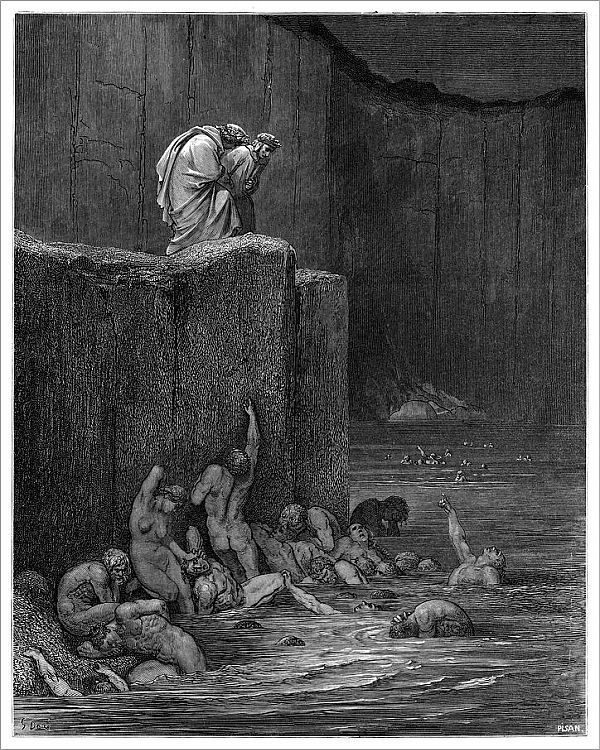
PURGATORY In ecclesiastical language, the state or the abode of temporary punishment for those souls, who having died in the state of grace, are not entirely free from venial sins or have not yet fully paid the satisfaction due to their transgressions. It is not a state of positive growth in goodness and in merit, but of purification effected by suffering. The Catholic doctrine, defined at the Council of Florence and repeated at the Council of Trent , is: (1) that there is a Purgatory; (2) that the souls suffering there can be helped by the prayers of the faithful, especially by the Sacrifice of the Altar. Although Holy Scripture does not expressly mention Purgatory, it presupposes it, and refers to it clearly enough, e.g., 2Machabees 12; Matthew 5,12; 1 Corinthians 3; Philemon 1:2; 1 Peter 3. Purgatory is firmly established by tradition and confirmed by the constant belief of the Church in suffrages for the dead. The chief punishment consists in being deprived of the beatific vision (pæna damni ). Besides this there is the additional punishment (pæna sensus ), which, according to the common belief of the Western Church, consists in real fire. They are certain of their salvation, and are confirmed in good, hence can no longer sin. Since they love God perfectly, they bear their sufferings with resignation. This love of God and resignation to His holy Will, according to many theologians, considerably lessens and mitigates the severest sufferings of Purgatory. In the early Church some heretics denied the existence of Purgatory. In the Middle Ages the Cathari, Waldenses, and Hussites rejected it, and in the 16th century Luther and Calvin and their followers did the same. Protestants, therefore, generally reject it. The Greeks have a vague and indefinite notion of it. Belief in Purgatory fosters piety. It deters man from venial sin, begets a spirit of penance, gives him occasion to practise charity to the dead, and awakens salutary thoughts of the life to come.
THE RELIGIOUS LIFE
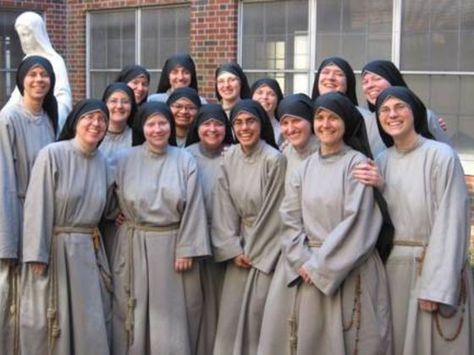
THE RELIGIOUS LIFE The religious are people who profess to aim at the perfection of Christian charity in the bosom of the Church, by the three perpetual vows of poverty, chastity, and obedience. The religious life pointed out to us by the Evangelical counsels is a life of charity and of union with God, and the great means it employs to this end are freedom and detachment from everything that could in any manner prevent or impair that union. From another point of view it is a devotion, a special consecration to Christ and God, to whom every Christian acknowledges that he belongs. Christian virgins were the first to profess a life distinguished from the ordinary, by its tendency to perfection; continence, and often the renunciation of riches, attached them specially to Christ. Shortly after them, appeared the “confessores” who also made profession of chastity and sometimes of poverty. In the 3century we find the first distinct traces of the kind of life in which the religious profession becomes by degrees perfected and brought under rule, that of the monks. The Gospel clearly states virginity and continence as the means, and charity as the end, of all religious life. Persecutions necessitated retirement and a first form of life entirely directed towards personal sanctification; community life produced obedience; the inconveniences caused by frequent changes of residence suggested the vow of stability; the excessive multiplication and diversity of religious institutes called for the intervention of the sovereign pontiff and his express approbation of rules; the needs of soul and body grafted the practise of corporal and spiritual works of mercy upon personal sanctification, and joined the reception of Holy Orders to religious profession; and the exigencies and difficulties of modern times caused the making of simple vows antecedent to, or in substitution for, solemn vows. Some examples of the regular religious life may be seen among the Canons Regular, the mendicant orders, the military orders, the hospitaller orders, the Clerks Regular, the Eastern orders, those orders founded principally for teaching, as the Christian Brothers, and innumerable congregations of nuns.
THE CHRISTIAN DRESS SENSE
THE CHRISTIAN DRESS SENSE We live in a culture where men and women (and especially women) are being treated as objects rather than persons. Advertisements and pop culture in general continually bombard us with images of the “ideal” man or woman. What is the “ideal” man or woman according to pop culture? It’s the male with perfect six-pack abs or the woman with the so-called “perfectly formed body” who is not shy about showing it off. Watch T.V. ads, look at the magazines, browse the Internet and you will quickly find that the message of our culture today is that the body is a sexual object plain and simple. And, furthermore, if you want to be someone you have to look like the supermodel. How sad that constant message is. And how demeaning it is to the dignity of both men and women. So what does that have to do with the way one dresses? Well, too often today clothing is designed to emphasize the exaggerated and erroneous importance of sexual appeal. Ones clothing should be just that…clothing. Unfortunately it is often designed to reveal every curve and shape of the body rather than to clothe it in modesty and dignity. This is a real problem. It’s especially a problem for the eyes of men because men tend to be easily visually stimulated. So, if clothing is immodest it sends a message to every man that you are inviting them to see you as an object. So, women do men a great service in helping them see their true beauty and dignity when they choose to dress modestly. For that reason, short skirts or tight jeans may do more damage than you realize. To help you understand this let me offer a silly illustration. What if your priest/pastor decided each weekend to show up for Mass in jeans and a T-shirt? Some may look at that and think it’s cool that he is so relaxed. But the vast majority would immediately see that this is odd. Clothing says a lot about who we are. Priests dress in clerics as a way of expressing the fact that they are priests. And the same is true with everyone. What we wear reveals how we see ourselves. Now, of course there are times when jeans and a T-shirt are totally appropriate. But what if everyone started dressing this way for every occasion? What if everyone at a family wedding dressed this way? Or if everyone was this casual for Sunday Mass? Obviously this makes a statement that those occasions are no different than a day off at home.So we should dress for the occasion with dignity and respect. Respect for ourselves, but, perhaps just as importantly, respect for the occasion we find ourselves in. Dressing up for Sunday Mass or a wedding, for example, tells others that you see this as an important occasion. It expresses respect.

SCIENCE AND RELIGION
SCIENCE AND RELIGION Much has been said and written about the so-called conflict between religion and science, as though the one were a contradiction or denial of the other. This conflict is for the most part imaginary. Religion and science lie in different provinces and each has its own legitimate field; the former deals mostly with the world of unseen realities which science cannot know, the latter mostly with the world of sense and matter about which religion has little to say. God is the source of both in so far as they are true, hence there can be no real contradiction between them. Conflict arises only when the scientist tries to turn theologian, or the theologian scientist. In other words, whatever conflict there is, it is not between religion and science, but between theologian and scientist when either or both overstep the limits of their respective fields in interpreting certain facts or in drawing certain conclusions from facts. “The scientist studies phenomena and their laws. The moment he abandons secondary causes to occupy himself with flrst and final causes he is false to his method and must become involved in an inextricable labyrinth; but so long as he is content to confine himself to matter and sequences of material phenomena there is little danger of unfriendly encounter between himself and the theologian who understands his business.” (Spalding, Lectures and Discourses) Likewise the theologian as long as he remains within his territory of revealed doctrine is not likely to bring upon himself the attacks of scientists. It is when he engages in speculation on matters about which religion should have nothing to say that he occasions what is so wrongly called the conflict between religion and science. The remedy or prevention lies in ascertaining what religion really teaches and what science really proves and in distinguishing this knowledge carefully from the speculations of some theologians on the one hand or the opinions of some men of science on the other. The truly great in either field are witnesses to the fact that true science and true religion are not at war with one another.

The church and other World Religions
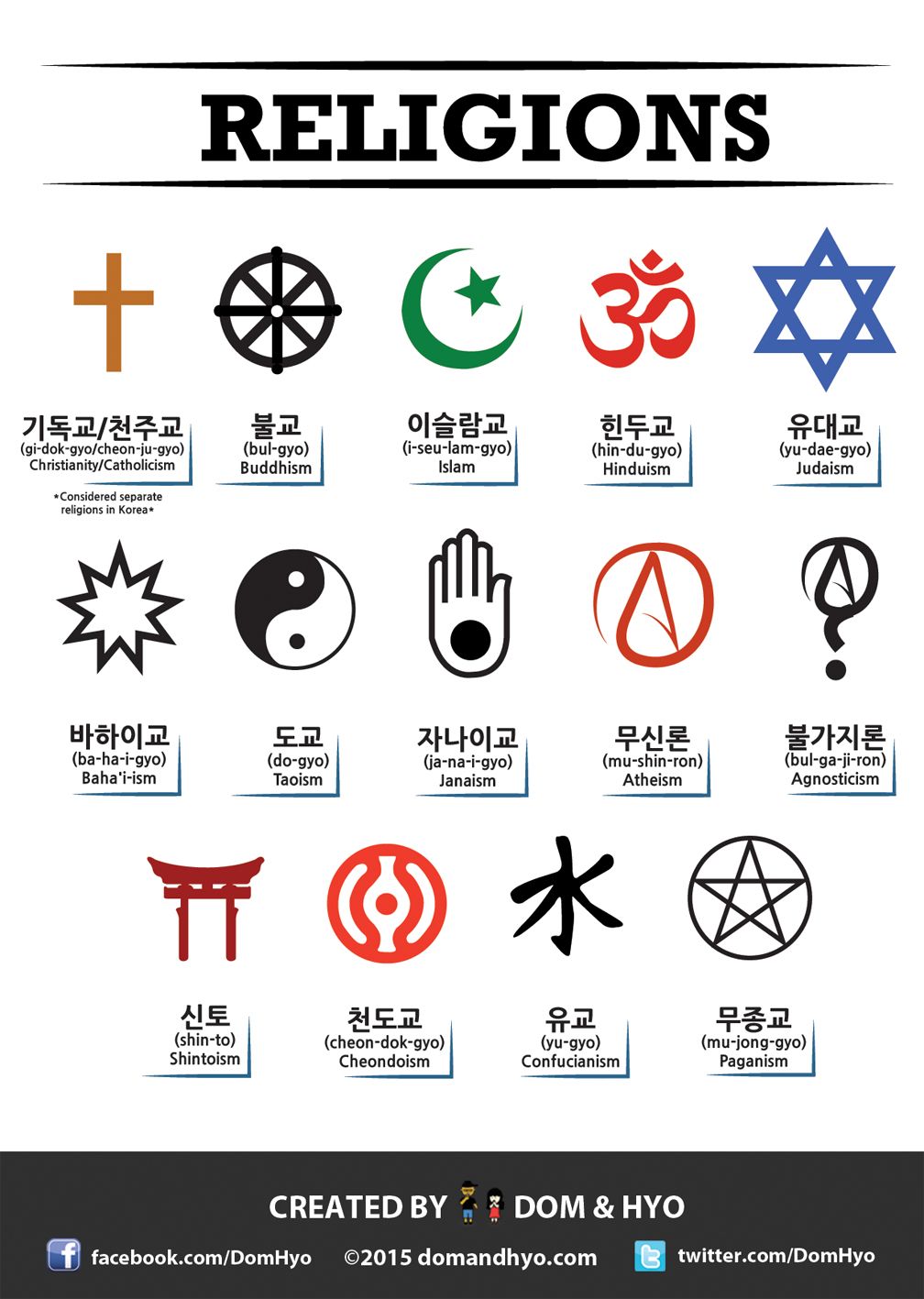
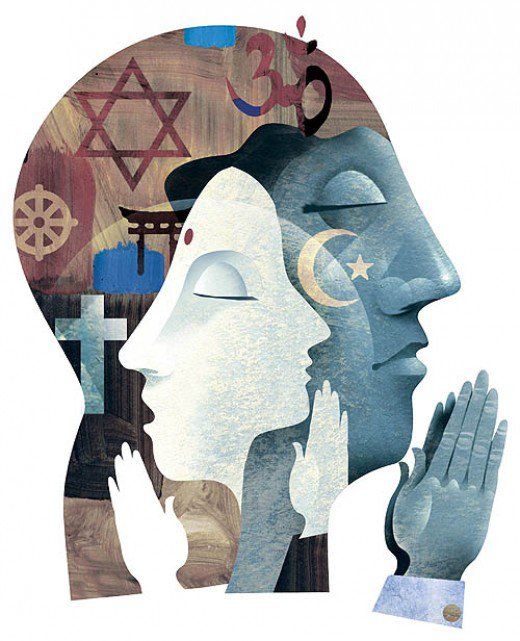
The church and other World Religions What the church thinks of each of the many other world religions depends upon the religion, and which aspect of that religion is being talked about. Let me give you two guiding teachings of our Church. First, it’s important to know that we, as Catholics, do not reject anything that is true in other world religions. Generally speaking, the various religions of the world founded throughout time and in various cultures were formed to help answer many of the most fundamental questions of human life. What is the meaning of life? Why are we here? Is there an afterlife? What is the moral good? Where does evil come from? All of these questions arise in our minds and hearts regardless of what age, culture or religious background we are born into. Therefore, it is very understandable that, from the beginning of time, there have been various attempts at answering these questions through religious means. When we look at the various religions of the world, we certainly find truths within them. Some profess a belief in one God. Some teach that we should seek the moral good. Some teach that we have a spiritual soul and should prepare ourselves for the afterlife. All of these teachings are consistent with what we believe as Catholics. Thus, anything we find to be true in other religions we applaud and support wholeheartedly. But with that said, there is another very important guiding principle to understand. Namely, we, as Catholics, believe that of all the many religions, the fullness of the truth is found in the Catholic Church. What does this mean? It means that even though there may be elements of truth in other religions, there is no religion that is more complete in its understanding of life, morality and truth than the Catholic faith. Along with that truth, it’s also important to understand that we accept only one Savior of all! This means that for everyone, be they Hindu, Jew, Muslim, Buddhist, etc., the only way to Heaven is Jesus Christ! Therefore, if a follower of another religion obtains the glorious gift of eternal salvation it can only come from the life, death and resurrection of Jesus Christ, the Savior of all mankind. So what do we think of other religions? We applaud all that is good and true in them. But we also acknowledge the ultimate Truth of God revealed in its fullness in our own Catholic faith. In fact, it should be our wholehearted desire that all people, of every time, culture and religion, come to know Christ Jesus as He is revealed to us most fully in the Catholic Church.
 Marian child